Showing posts with label Literary Fiction. Show all posts

Tuesday, September 14, 2010

Parrot and Olivier in America


This was a slow start, but then I became utterly engrossed in the lives of Parrot and Olivier, though I often wished this was just Parrot's story -- what a life. Having never read de Toqueville I'm not sure if his trip to America and his writing about it was as vacuous and misjudged as Olivier's books almost certainly were. And while Parrot derides Olivier's ultimate conclusions about where democracy in America would lead, I fear 200 years later that Olivier's truths are being born out. Hopefully we as Americans can soon rise above the place we find ourselves these days with half the country merely trying to out yell the other half.

Monday, October 19, 2009

Lark & Termite

I did not like this book. It's a shortish book, but it was not a fast read. The story is told from shifting points of view over a few days both in 1950 and 1959. Basically it's a character study, and that's my main beef with it. I just did not like, identify with or enjoy these characters. The action was all remembered by the characters, and there just wasn't enough of it for my taste. Some might describe this as lyrical or poetic, but I describe it as dull.

Monday, October 12, 2009

City of Refuge

This is the novel I'll be recommending to anyone who asks me and probably to those who don't. Piazza tells the story of New Orleans and Hurricane Katrina through some of the most real characters I've ever encountered in fiction. The descriptions of the storm itself and aftermath of the levee breaks are visceral, but it's the characters who really drive this story. I love the city of New Orleans and have been back several times since Katrina. This story cements my love for the city and my hopes that the government will do whatever it takes to do things right in the future so that Katrina never happens again.

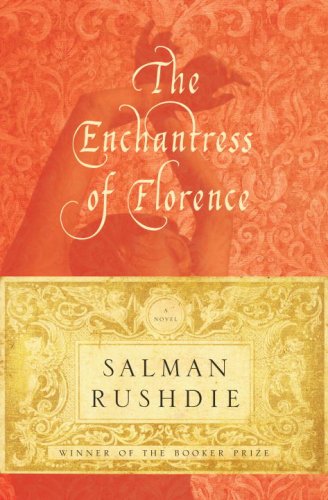
The Enchantress of Florence

This is my first Salman Rushdie novel. And I liked it. It's essentially a fairy tale right out of 1001 Arabian Nights. Set in the Middle Ages, this tale spans from India to the city state of Medici-run Florence and back again (and back again and again). Rushdie plays with the power of story-telling both to ourselves and to audiences. It's easy to be enchanted by this tale.

Monday, September 21, 2009

The Girl With The Dragon Tattoo

This has been on my want to read list for about a year, and I'm glad I could finally track it down at the library. The novel, set in Sweden, starts slow. It took me some time to get used to the Swedish names, especially the place names given that I have zero knowledge of Swedish geography. But once the story begins to shift from financial reporting and background checks to that of a disappearing heiress things really pick up and it's hard to put the book down. I won't give any of the plot points away, but I really like how complex this story is, both in terms of the number of elements and people in play to what they've all been hiding. I can't wait to get a hold of the sequel.

Monday, September 7, 2009

Sacred Games

Whew! What an epic. I started this book in late May or so, then put it down in late June and then started back up with it after getting home from the beach. It was 947 pages crammed full of true writing. I'm glad I picked it back up.

This complex tale centers mainly around a Sikh police detective, but he is merely a jumping off point for many, many more well-drawn, thoroughly three-dimensional characters. The novel is mainly one of character and place rather than plot, though plenty happens too. Dickens has nothing on Chandra in terms of interweaving the stories of these many and varied people that populate the novel. It's a sometimes taxing read, but the book was well worth the effort, and I could easily go another 300 pages with these characters.

Saturday, August 15, 2009

An Arsonist's Guide to Guide to Writers' Homes in New England

Now with a title like this your imagination can go to all sorts of places. But essentially this is the story of a family and a boy/man and his two families, the one in which he is the son and the other in which he is the husband and secondarily the father.

Nevertheless the author also explores our relationship with books and authors, both living and dead and how they affect those of us who read. Like several characters in the novel, several times this week I didn't enjoy a book because I was afraid I was becoming the character I was reading. It raises the interesting and personal question, do we read to escape, to identify, or something else, or all of the above?

Friday, August 14, 2009

Water for Elephants


This book cover has intrigued me for quite a while. I would see it at the book store, and that shiny pink coat would catch my eye. But I had never picked it up to even see what it was about. Instead I found it on list of NPR's Summer Beach Reads and decided to bring it with me.

And boy am I glad I did. It's about the circus! Train circuses in the 1930s to be specific. What a world. Gruen does a fantastic job of painting a picture of this strange world and the people who find themselves in it. I would strongly recommend this book to anyone. It's a fast read with engaging characters and a spectacular setting. I want to continue to follow Jacob wherever he ends up.

Thursday, July 3, 2008

The World To Come


I found this book while wandering through the stacks of the library. One thing about it that appealed to me was the reference to the artist Marc Chagall. I've been to the Chagall museum in Nice, France and have seen his beautiful stained glass window at the Art Institute in Chicago.

But despite the Chagall tie, I almost put the book down when I discovered it is essentially the story of Jews, specifically displaced Yiddish speaking Russian Jews and their offspring. I don't have anything against that community, but it's pretty far removed from my own. But I'm glad I didn't put the book down.

The author, Dara Horn, weaves generational stories with essentially a MacGuffin mystery plot all in the service of talking about life and death and what separates them and what life, the arts and ultimately we mean. It was at times incredibly moving and beautiful. And while I don't agree philosophically or theologically with the author's conclusions and was frustrated by the ending, it was a worthwhile read.

Sunday, June 29, 2008

Saturday


Saturday by Ian McEwan is the fourth McEwan novel I've read in the past year and definitely my favorite. The action takes place in a single Saturday. The protagonist, Henry Perowne, a late 40s London neurosurgeon lives out a both commonplace and momentous (planned and unplanned) day as he ponders his life and post-9/11 Western society and politics.

I particularly enjoyed the novel because it was set in the part of London, Fitzrovia, where I lived one summer as a student.